
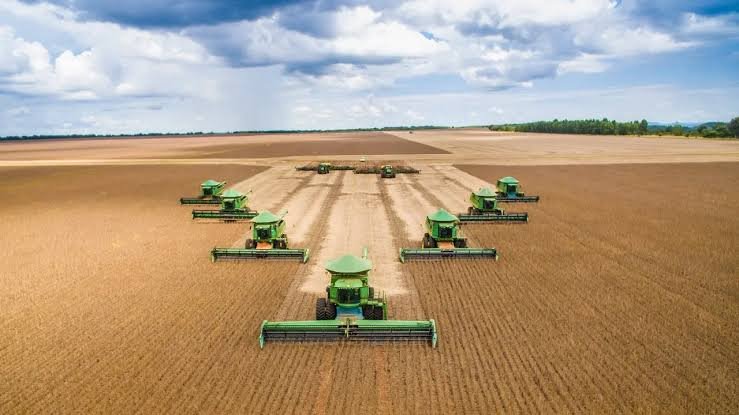
Premium agricultural land: what turns a rural property into a strategic asset
Published on 18/07/2026
Auto-translated from Portuguese.
What defines premium farmland
Premium farmland is not just expensive or sprawling property. It is an asset that combines productivity, legal security, infrastructure, efficiency, resilience and liquidity.
Two farms with the same area can present very different values. What matters is the effectively usable area, its productive capacity and the ability to generate income consistently.
Soil, water and climate
Soil influences productivity, correction costs, mechanization and crop choice. Texture, depth, fertility, drainage, organic matter and management history need to be analyzed together.
Water has become one of the biggest differentiators. Rains, rivers, wells, reservoirs, irrigation and grants determine productive security. The physical existence of the resource does not mean freedom of use.
Climate, altitude and exposure to drought, frost, hail, heat or floods must be compared to the intended activity.
Productivity, location and infrastructure
A premium property must demonstrate productivity per hectare, crop history, costs, rotation and performance compared to the regional average. Projections without historical data require caution.
Location directly affects margins. Distances to highways, warehouses, cooperatives, agribusinesses, railways and ports can transform good land into an uncompetitive operation.
Internal roads, energy, silos, irrigation, connectivity and operational structures reduce the initial investment, as long as they are adequate and in good condition.
Land and environmental security
The physical quality of the asset needs to be accompanied by regular documentation. Registration, chain of ownership, georeferencing, confrontations, encumbrances, occupations and rights of third parties must be verified.
It is also necessary to evaluate the Rural Environmental Registry, legal reserves, preservation areas, licenses, water use and possible liabilities. Irregularities reduce liquidity, make credit difficult and can impede the transaction.
Management, technology and income generation
A good farm can lose value when it depends on informal operations, weak teams or a lack of controls. Labor governance, processes, data and management capacity directly influence performance.
Precision agriculture, sensors, satellites, drones and telemetry increase efficiency when data drives decisions. Technology without management does not guarantee results.
Income can come from own production, leasing, livestock, forests, energy, integration or land appreciation. The investor must separate the value of the property from the result generated by the operator.
Liquidity, due diligence and strategic value
The exit strategy must be analyzed before purchasing. Recognized location, adequate scale, productivity, regular documentation and professional presentation expand the universe of buyers.
Due diligence must integrate agronomic, land, environmental, operational, logistical, financial and market analyses. A premium property needs to prove its attributes through maps, records, soil analysis, permits, production history and financial information.
True value comes from the combination of natural resources, security, infrastructure and management. Premium farmland produces today, resists risks and preserves value over the long term.
Unparalleled Business
Knowledge. Governance. Opportunity.
Strategic Assets Series